
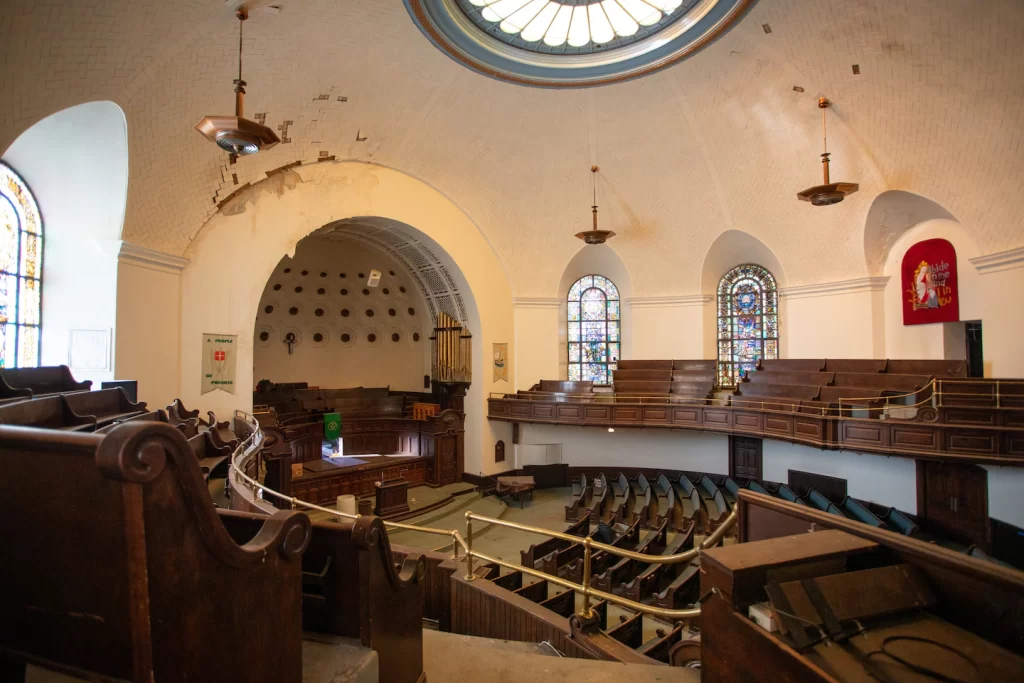
Founded in 1907, National Baptist Memorial Church has deteriorated over the decades. A $30 million restoration effort seeks to remake the building into a vibrant community center where church services will still be held.
By Michael Brice-Saddler, The Washington Post
When the Rev. Lisa Banks-Williams was asked to be the lead pastor of National Baptist Memorial Church in D.C. last year, she knew she was inheriting more than a thinning congregation.
The historic church building, with a steeple that soars over a portion of the Columbia Heights neighborhood, had been in decline for years, and the pandemic only made things worse: Plaster was crumbling from the walls and ceiling, and generations of pigeons had made their home in the rafters.
“I had to pray, because it’s a pretty creepy building,” Banks-Williams said. “I was like, ‘Well, Lord, how are we going to do this?’”
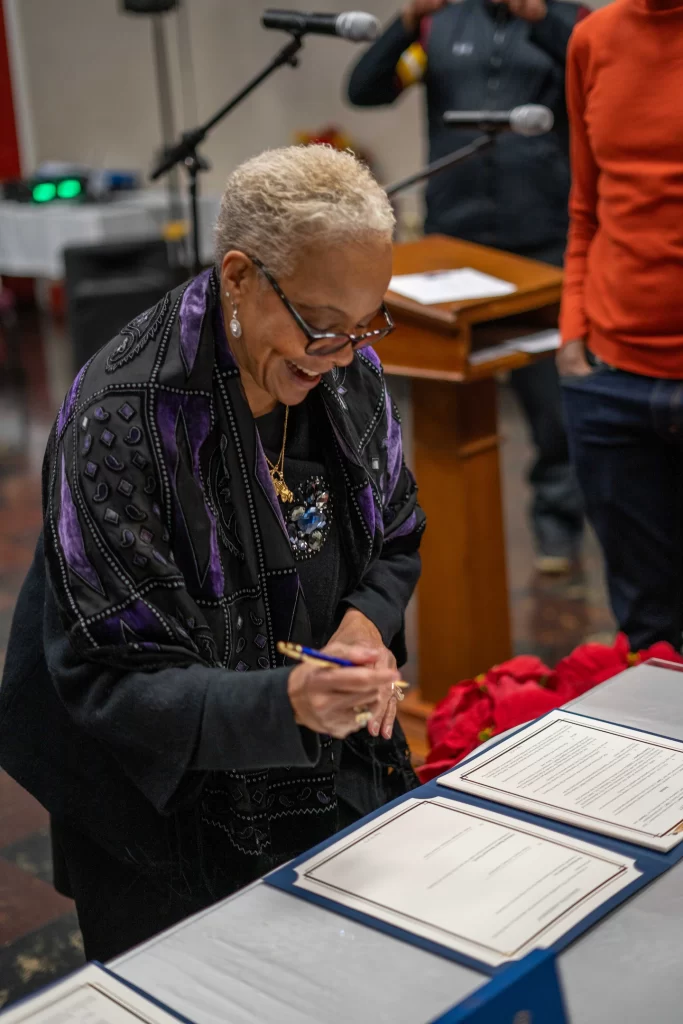
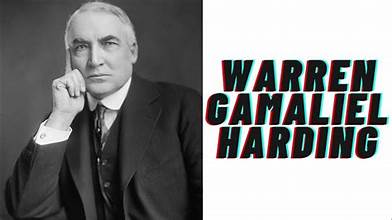
She took the job anyway, determined to keep the ministry alive. Founded in 1907, the church that drew President Warren G. Harding to a building groundbreaking ceremony during the early 1920s still had an important role to play in the neighborhood, she said — even if that role needed to change.
Now, a $30 million renovation of the 50,000-square-foot building is under way. Her church has joined forces with The District Church, a younger congregation nearby, to form a nonprofit that will restore and share the space inside National Baptist, breathing life into the timeworn landmark that is listed on the city’s registry of historic sites.
The project, called RESTORE, will include a remodeled 1,000-seat sanctuary, a childcare center and a community outreach hub aimed at keeping the property open seven days a week.Those leading the effort say it also runs counter to a national trend of aging congregations and shuttered churches, many of which have been sold off or stripped of their original purpose.
The recovery plan for National Baptist Memorial Church, Banks-Williams said, was made possible through what she calls a series of small miracles.
The first came when an outstanding $1.6 million D.C. property tax bill turned out to be the result of an overcharge, cutting the amount the church owed to $7,400. Banks-Williams, 63, said the reduction was a huge relief, allowing her to shift focus from survival to rebuilding.
Then the company hired to clear the sanctuary of the pigeons accepted half of its $54,000 fee up front and agreed to finance the rest at a low rate, a concession that Banks-Williams took as another sign of grace. Crews filled about250 bags with bird debris and waste, scrubbing every surface to make it possible for the sanctuary to be used again.
For Totlyn Taylor, a longtime member of the church, the pigeons were the low point. She’s attended services at National Baptist since 1969 — long enough to see the once-bustling congregation dwindle to a few dozen members and watch the building fall into disrepair. Taylor, 88, said members patched what they could over the years, but major repairs were always out of reach.
During the pandemic, she said, “the birds took over the entire building,” as broken windows allowed them to nest in every room and closet.
“The birds kept coming in one by one until they became a family,” she added. “It was a disaster.”
Taylor said the effort to restore National Baptist is one of the greatest things she’s ever witnessed. She hopes the renewed church will become “a beacon of hope at the crossroad of light” — her way of describing the busy intersection at 16th Street and Columbia Road NW where the eye-catching church has long stood.
Just up 16th Street, Aaron Graham, the pastor at The District Church, realized his congregation was outgrowing its home at the Columbia Heights Educational Campus.
Founded in 2010, Graham’s church now draws about 850 people each weekend. He and his wife, Amy — who is co-pastor at The District Church — met with Banks-Williams to explore options for a permanent space, a conversation that soon went deeper than shared logistics. They all saw the potential in a partnership that could preserve the historic National Baptist building while expanding the reach of both churches.
Banks-Williams said that connection led to the third miracle: an unexpected link to a local developer whose great-grandfather Edwin Davis helped build the church’s sanctuary during the 1930s.
The developer, Jim Davis, is a longtime friend of Graham’s. When Graham sent him a photo of the church, asking if he knew anything about it, Davis recalled, he was stunned.
“My grandfather built that church,” he told Graham, referring to his great-grandfather, whose name Banks-Williams and Graham later found in a 1932 dedication booklet from the church’s construction.
Davis, 67, will now serve as general contractor for the project — a job, he said, that feels like a family legacy come full circle.
The partnership between the two churches was formalized this year under a new nonprofit called District National Holdings, which will oversee construction and manage joint programming once the building reopens. Demolition of the church’s interior is scheduled to begin in early January, and major services will resume in the restored sanctuary once construction is complete in mid-2027.
While construction moves forward, National Baptist has been holding services at the Columbia Heights Educational Campus, sharing space with the District Church congregation.
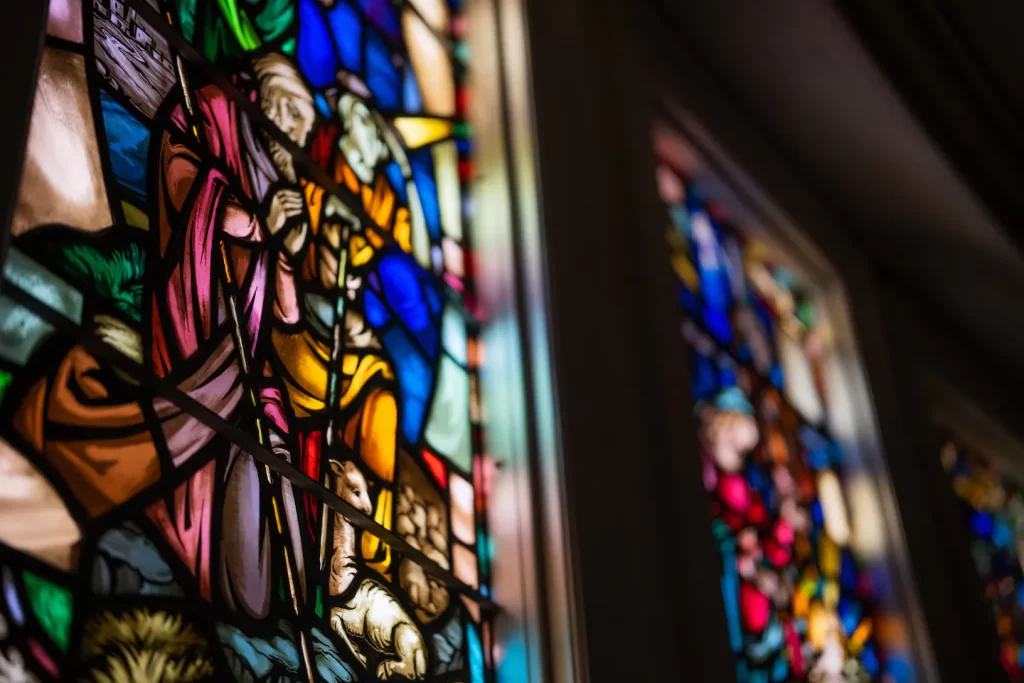
When finished, the renovated church will retain its historic sanctuary but will feature a rebuilt interior designed for shared worship, outreach, and community events. Plans call for a full childcare center serving up to 150 children as well as flexible event and meeting spaces. A dedicated outreach center will focus on food, clothing, and support services for residents in need.
Church leaders say the partnership also reflects how faith communities in Washington are changing — becoming younger, more diverse, and increasingly focused on serving their neighborhoods.
Graham, 45, said his congregation — which is now 72 percent people of color and largely made up of millennials and Gen Z — shows how faith communities are evolving in the city.
“The diversity of our congregation mirrors the neighborhood around us,” Graham said. “That’s what we hope this building will represent — a place where people from every background can come together and feel at home.”
Graham said the $30 million restoration will be funded through a mix of internal giving, outside donations and financing. The District Church has already raised $5 million, with another $7 million to be sought through a fundraising campaign that launched Sunday. The remaining funds will come from additional donors and loans.
“A lot of terrible things have happened to churches because they’ve fallen into disrepair,” Banks-Williams said. “But God has blessed us to have a partner who wants to come in, has the resources — and the proximity. Imagine the idea that they worship just a block away.”
Congregants from both churches have spent the past year preparing the property for construction, clearing out decades of furniture, hymnals, and church records. They donated supplies to nearby schools and congregations and sent hundreds of chairs to churches in Asheville, North Carolina, that were damaged by flooding from Hurricane Helene.
The process was bittersweet, Banks-Williams said — “saying goodbye to what was, but also making room for what’s next.”
Across the country, thousands of churches are grappling with a similar challenge. Roughly 15,000 congregations are expected to close this year as aging membership and pandemic-era losses have drastically shaped American religious life, according to a recent Axios analysis. Many of those properties, including those in D.C., are being converted into housing or event spaces — a trend Graham said makes this effort stand out.
“When a sacred space can be kept for its founding mission, it’s a win not only for the church, but for the community,” he added.
For Banks-Williams and her congregants, the work ahead is steep but hopeful. Taylor, the longtime member, said she’s praying to live long enough to see the church restored — a moment she said “would bring peace to my soul.”
“What I’m praying for,” she said, “is that the Lord keeps me alive to see this place shine again — to hear the bell ring, to see people coming in from all directions, through all seven doors. Then I’ll lift my hands and say, ‘Thank you, Jesus.’”