
The group, which included a religious adviser to the president, sent a letter to Trump officials — an unusual instance of evangelical leaders urging the administration to change course.
By Jack Jenkins
(RNS) — More than 120 Christian leaders, musicians, and authors, including both conservative and liberal-leaning evangelicals, have signed a letter urging President Donald Trump’s administration to spend $1.35 billion designated for global health initiatives before the funds potentially expire at the end of the month.
The letter, obtained by Religion News Service, is an unusual instance of prominent evangelical leaders — including one of the president’s own religious advisers — challenging the administration and urging it to change course. The letter, which was sent Sept. 18 to White House Chief of Staff Susie Wiles and Office of Management and Budget Director Russell Vought, referenced that the $1.35 billion in funds are currently slated to help cover the cost of a “closeout” of United States Agency for International Development programs.
Signatories want the funds used for their original purpose — global health initiatives — and are concerned the money could be considered expired at the end of the month.
“These global health programs reflect our shared moral commitment to protect life, especially children and pregnant women,” the letter reads. “We also share the Administration’s commitment to responsible stewardship of public resources. For decades, U.S. global health investments have reflected these principles while saving lives and advancing American interests around the world.”
The letter, which was organized by the 2030 Collaborative, a consulting group that works with advocacy organizations, was signed by the Rev. Samuel Rodriguez, a longtime member of Trump’s group of evangelical advisers, who leads the National Hispanic Christian Leadership Conference. Other prominent evangelical signers include Myal Greene, president of World Relief, an evangelical Christian humanitarian group; the Rev. Gabriel Salguero, head of the National Latino Evangelical Coalition; Rick Warren, co-founder of Saddleback Church in Lake Forest, California; Russell Moore, theologian at Christianity Today; Amy Grant, a well-known contemporary Christian musician; and Charlie Lowell, a member of the Christian band Jars of Clay.
More liberal-leaning evangelicals (such as Shane Claiborne, an activist and co-founder of Red Letter Christians), prominent Black pastors (such as Pastor Walter August Jr., who leads both The Church at Bethel’s Family in Houston and an affiliated humanitarian group) and mainline Protestant leaders (the Rev. Letitia M. Campbell, a Presbyterian Church (U.S.A.) minister and professor at Emory’s Candler School of Theology) are also among the signatories.
So, too, are Catholic leaders, such as Mary Beth Powers of the Catholic Medical Mission Board, and members of the Church of Jesus Christ of Latter-day Saints, such as Emma Adams, one of the leaders of Mormon Women for Ethical Government.
The letter strikes a conciliatory tone, with signatories saying they “appreciate the work that the Administration is doing,” while also insisting the funds in question — around $320 million for maternal and child health, $250 million for malaria prevention and $135 million for nutrition — serve a religious imperative to “take a stand for the last, the least, and the lost.”
The letter refers to Matthew 25 in the Bible, which authors note includes a passage where Jesus “teaches us to attend to the hungry, the thirsty, the stranger, the naked, the sick, and the imprisoned.”
“The moral stakes are considerable,” the letter reads.
According to Jenny Dyer, head of 2030 Collaborative, the White House has not yet responded to the letter. White House officials did not immediately respond to a request for comment from RNS.
But Dyer said that 42 faith leaders — including many of the letter’s signers — are planning to meet with White House officials next week at a global health “listening session” hosted by the White House Faith Office.
Dyer said she and others plan to voice their concerns about foreign assistance funds, and while State Department officials are expected to be present, she is hoping to invite OMB officials to the meeting.
“It’ll be 42 faith leaders flying in from across the United States who are showcasing a united front of moral support — because these are moral issues — on behalf of the world’s poorest,” she said.
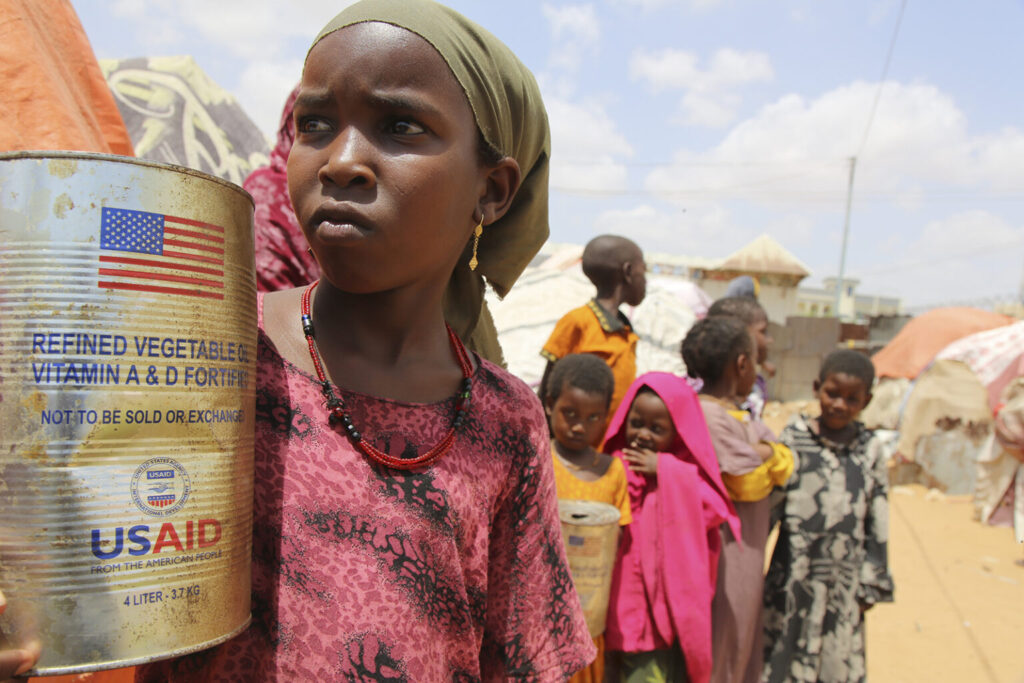
Trump administration officials such as Vought have denied allegations that cuts to foreign aid programs have resulted in widespread deaths. But according to investigations by outlets such as The Associated Press, cuts to USAID under the Trump administration have been tied to deaths of babies, children, and pregnant women in places such as Nepal, Myanmar, Nigeria, and Somalia.
The looming potential deadline for the funds has caught the attention of some members of Congress. On Thursday, Republican Sen. Susan Collins of Maine issued her own letter to Vought, Secretary of State Marco Rubio, and the current administrator of USAID.
“I urge USAID to ensure that the funding is spent to combat public health threats consistent with congressional intent, either by obligating the funding prior to the end of the fiscal year or transferring funds to the Department for such purposes,” Collins said.
In addition, Democratic Sen. Patty Murray of Washington questioned Rubio about the funds — including money mentioned in the faith leaders’ letter — during a Senate hearing in June, as did Sen. Brian Schatz, a Democrat from Hawaii.
“The three billion that we enacted for specific purposes should be used for those specific purposes,” Schatz said.
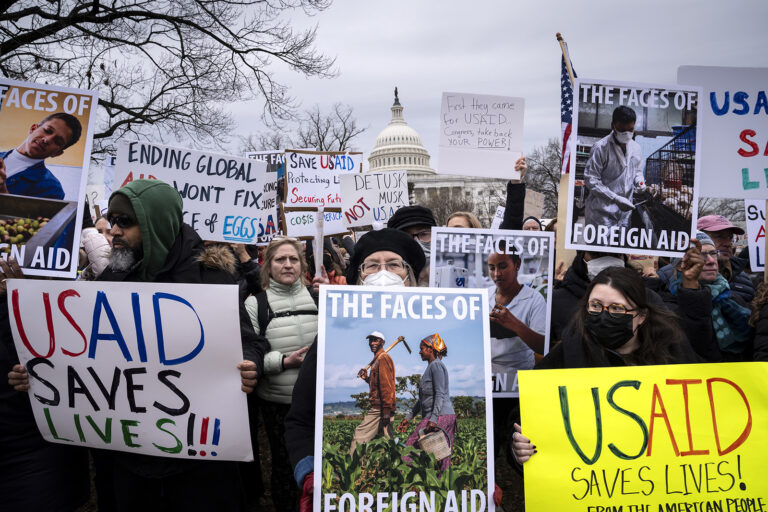
When the Trump administration first announced a slate of foreign aid cuts last year, evangelical groups were among the broad spectrum of religious organizations that voiced concern. Some evangelical leaders — including members of organizations represented among the signers of the new letter — assembled near the U.S. Capitol for a “Prayer Vigil for Foreign Aid.”
Despite the cuts, the government announced in August plans to dole out nearly $2 billion in funding to Christian organizations for health and humanitarian work, such as World Vision, Compassion International, and Samaritan’s Purse.
First published Sept. 25, 2026